How to Use First-Party Data for Smarter Email Image Personalization
Why First-Party Data Is the Foundation of Email Personalisation
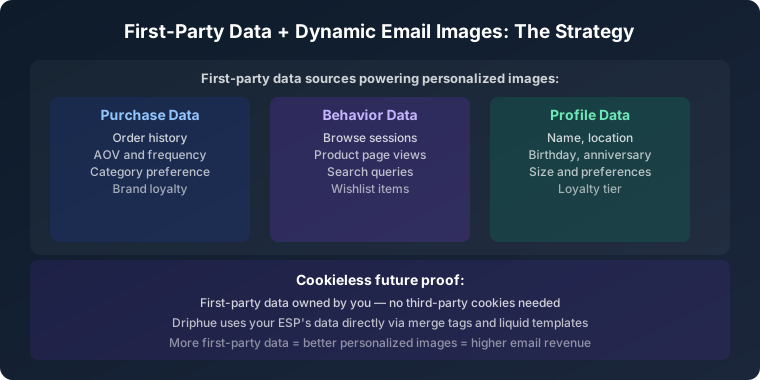
As third-party cookies disappear and privacy regulations tighten globally, first-party data — information customers voluntarily share with your brand — has become the most valuable asset for email personalisation. Unlike third-party data sourced from advertising networks or data brokers, first-party data is accurate, consented, and directly relevant to the subscriber relationship. It is information the customer chose to give you, which means using it feels appropriate rather than intrusive.
E-commerce brands sit on a goldmine of first-party data that most are not fully exploiting for personalised image generation: names, purchase history, browse behaviour, account preferences, event dates, and product category interests. Each data point is a personalisation parameter that can be rendered into the email hero image at the moment of open, transforming a generic campaign send into an individually relevant visual experience. This guide covers the types of first-party data available, how to collect more of it, how to translate it into personalised images, and the privacy principles that keep personalisation feeling helpful rather than surveillance-like.
Types of First-Party Data for Image Personalisation
Identity Data
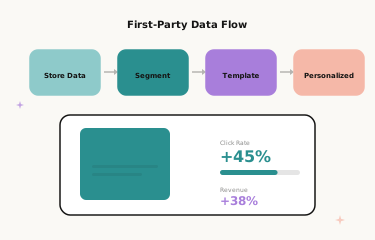
The most fundamental first-party data is subscriber identity: first name, last name, and email address. Every ESP stores this data, and it requires no additional collection effort. Name personalisation on email hero images is the simplest and highest-impact application of first-party data — “Sarah, Check This Out” on a hero image consistently drives 25–45% higher click-through rates than the identical image without the personalised name, simply because the subscriber’s brain pauses at their own name where it would not pause at generic copy.
Name personalisation is the starting point, not the ceiling. Every additional data type enables a new dimension of personalisation on top of the name foundation.
Transaction Data
Purchase history is the richest behavioural signal available for image personalisation. Transaction data reveals product category preferences, average order value, buying frequency, and brand relationship depth. Use transaction data to personalise images based on past purchases: “Sarah, New Arrivals in Women’s Running” for a subscriber whose three most recent purchases are all running gear creates a highly relevant visual experience that generic “new arrivals” imagery cannot produce.
Transaction data also powers segmented personalisation — different image templates for one-time buyers, repeat purchasers, and high-value customers — where the visual framing changes based on the subscriber’s purchase relationship with the brand. For the full segmentation strategy built on transaction data, see our email segmentation guide.
Behavioural Data
Website browsing behaviour — products viewed, categories explored, time on page, search queries — provides intent signals for personalisation even when no purchase has been made. A subscriber who browses your women’s outerwear category three times in two weeks without buying is a warm prospect for personalised outerwear imagery in the next campaign send. Browse abandonment emails with personalised images referencing the viewed category drive subscribers back to complete their research at significantly higher rates than generic re-engagement sends.
Behavioural data requires integration between your e-commerce platform and your ESP. Most major platforms (Shopify, WooCommerce, BigCommerce) sync browse and cart data to compatible ESPs via native integrations or apps. For Shopify-specific setup, see our Shopify guide. For WooCommerce, see our WooCommerce guide.
Preference Data
Data collected through quizzes, preference centres, and account profile prompts represents the highest-quality first-party data because customers explicitly and consciously shared it. A subscriber who selected “minimalist style” in a style quiz sees clean, minimal personalised imagery; someone who selected “bold and colourful” sees vibrant, high-energy designs. This level of personalisation — where the image aesthetic matches the subscriber’s stated preferences — is impossible with inferred data and requires zero-party data collection as its foundation.
For the full zero-party data collection strategy, see our zero-party data guide.
Engagement Data
Email engagement history — open rates, click rates, which campaigns drove purchases, which flows see the highest activity — informs both personalisation strategy and template selection. Highly engaged subscribers are receptive to product-focused personalised imagery and premium offers. Less engaged subscribers who have not opened recently are better served by incentive-driven personalised images: “Sarah, Here’s 15% Off — We Miss You” creates re-engagement motivation that a standard promotional image would not. Engagement data is also essential for list health management — identifying subscribers who need re-engagement campaigns before they become inactive enough to warrant sunset.
For the full re-engagement strategy built on engagement data, see our re-engagement guide.
Location and Contextual Data
City, state, and country data enables location-based personalisation that makes campaign imagery geographically relevant. A clothing brand sending a seasonal campaign can show region-appropriate product imagery — warm-climate outfits to warm-climate subscribers, cold-weather styles to colder regions — in the same send. Location data also powers shipping deadline personalisation: “Sarah, order by Thursday for delivery to Portland before Christmas” is a personalised, specific deadline rather than a generic national cutoff. For the full location personalisation strategy, see our location personalisation guide.
Collecting First-Party Data for Personalisation
Signup Forms
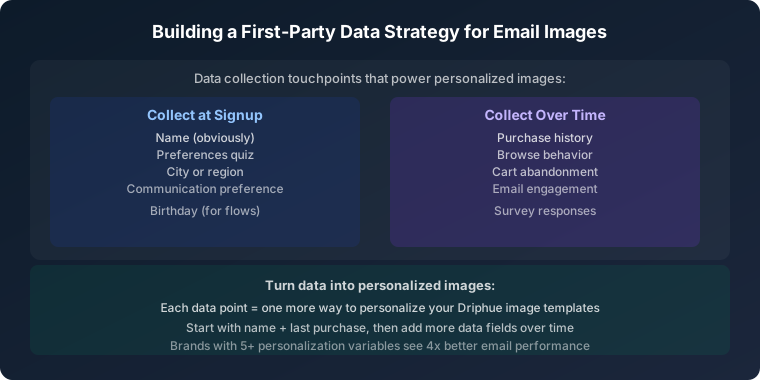
Signup forms are the first-party data collection touchpoint with the highest volume and the clearest consent signal — the subscriber is actively enrolling. Collect personalisation-relevant data at this point: name (always), location (city or postal code for shipping and location personalisation), birthday month (for birthday campaigns), and one or two preference questions. Keep the form concise — each additional field reduces completion rate — but include the questions that power the highest-impact personalisation dimensions.
Progressive Profiling
Do not attempt to collect all useful data at signup. Progressive profiling distributes data collection across multiple touchpoints: an onboarding survey three days after signup, a style quiz embedded in a welcome email, a preference update prompt in a monthly newsletter. Each touchpoint collects one or two additional data points, building a richer personalisation profile over time without the friction of a lengthy initial form. For the structured data collection approach, see our zero-party data guide.
Account Profile and Preference Centres
Offer subscribers a preference centre where they can update their interests, communication frequency, and data. Subscribers who actively manage their preferences are signalling engagement and investment in the brand relationship — and the data they provide is the highest-quality input for personalisation because it is deliberate and current. Incentivise preference centre completion with a discount or exclusive access for subscribers who fill it out.
Turning Data into Personalised Images
The key principle is using data to make images feel individually relevant without feeling like surveillance. Effective personalisation feels like helpful curation — the brand paying attention to what matters to you. Ineffective personalisation feels like being tracked — the brand demonstrating how much data it has collected.
Effective: “Sarah, New Arrivals in Women’s Running” — uses name and purchase history to imply category curation without citing the data mechanism.
Ineffective: “Sarah, We noticed you looked at this product 4 times this week” — reveals the surveillance mechanism explicitly, which creates discomfort rather than relevance.
Design personalised images around outcomes (relevant imagery, relevant timing, relevant offers) rather than inputs (the behavioural data behind the personalisation). The subscriber should feel understood, not observed.
Privacy-First Personalisation
First-party data personalisation is inherently privacy-friendly because it uses voluntarily provided information. But maintaining trust requires being transparent about how data is used, making preference management easy and accessible, and using data to serve the subscriber’s interests rather than to demonstrate surveillance capability. For full GDPR compliance guidance covering personalised email images, subscriber consent, and data handling, see our GDPR compliance guide.
Real Results from First-Party Data Personalisation
Multi-category retailer — 48% higher email revenue: Implementing first-party data-powered personalised images across lifecycle and campaign emails — using purchase category history to personalise imagery rather than sending the same hero image to the entire list — increased email-attributed revenue by 48% over the first six months of the programme.
DTC brand — 2.9x engagement from preference data: Subscribers who completed a style quiz and received preference-matched personalised images engaged at 2.9x the rate of subscribers receiving generic images, confirming that explicitly collected preference data produces meaningfully stronger personalisation signal than behavioural inference alone.
Start Leveraging Your First-Party Data
Your first-party data is your most valuable personalisation asset, and most brands are using only a fraction of it — name personalisation on a minority of flows, if that. The path to full first-party data activation is straightforward: audit what data you already hold in your ESP, identify the personalisation dimensions it enables, design Driphue templates that incorporate those dimensions, and deploy starting with your highest-volume flows.
For the comprehensive email personalisation strategy context, see our email personalisation guide. For the 90-day activation roadmap, see our implementation roadmap. Start your free Driphue trial and transform your customer data into personalised email experiences.
Keep reading
More from the blog
 Marketing Strategy
Birthday and Anniversary Email Campaigns: Personalized Images That Drive Repeat Purchases
9 min read Marketing Strategy
Black Friday Email Marketing with Personalized Images and Countdown Timers
10 min read Marketing Strategy
Dynamic Countdown Timers in Emails: How to Create Urgency That Actually Converts
6 min read
Personalise every image in your emails
Turn your Klaviyo, Brevo or any-ESP campaigns into dynamic, per-subscriber images and countdown timers — no code required.