How to Segment Your Email List for Better Image Personalization Results
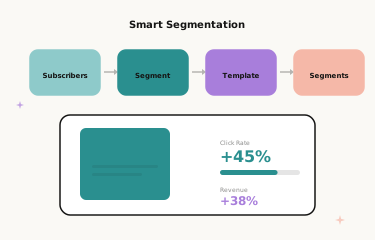
Why Segmentation Multiplies Personalisation Impact
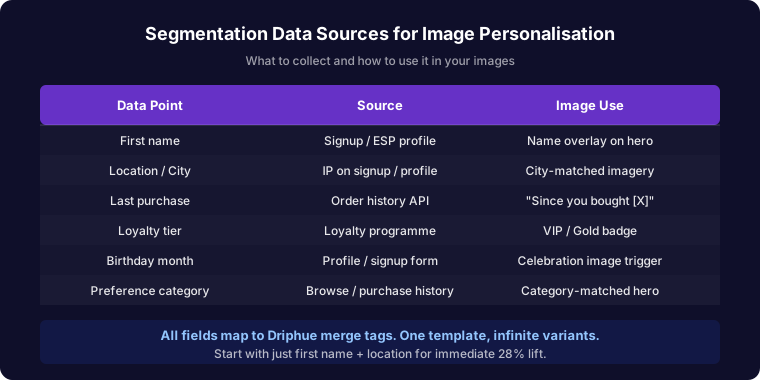
Name personalisation on its own is powerful — adding a subscriber’s name to the hero image of an email consistently drives 25–45% higher click-through rates. But name personalisation alone does not address relevance. A first-time subscriber who has never purchased needs different messaging and imagery than a loyal customer who has bought twelve times. A subscriber who just abandoned a cart needs a different visual approach than one who opened your last three emails without clicking.
Segmentation is what makes personalisation contextually relevant rather than just individually addressed. Segmentation determines what story to tell; personalisation determines how intimately to tell it. Together, they create email experiences that are both contextually appropriate for the subscriber’s relationship with the brand and individually addressed to them as a specific person. This guide covers the essential segments for personalised image campaigns, how to build segment-specific templates, how to combine segmentation with other personalisation dimensions, and the performance results that follow.
Essential Segments for Image Personalisation
Customer Lifecycle Segments
Lifecycle segmentation is the foundation of personalised email strategy. Each stage of the customer lifecycle has a distinct relationship with the brand, distinct needs, and distinct personalisation approaches that resonate.
New subscribers have joined the list but have not purchased. Personalised images for this segment focus on welcome messaging, brand introduction, and first-purchase incentives: “Welcome, Sarah — Here’s 15% Off Your First Order” in a warm, inviting design that introduces the brand’s visual identity. The goal is reducing the perceived risk of the first purchase. For the complete new subscriber strategy, see our welcome series guide.
First-time buyers have made one purchase and are in the critical window where the second purchase either happens or the relationship stalls. Personalised images for this segment reinforce the purchase decision and encourage the cross-sell or upsell: “Sarah, Thank You! You Might Also Love…” with category-relevant imagery based on what they purchased. The first-to-second purchase conversion is the highest-leverage moment in customer lifetime value development.
Repeat customers have made two or more purchases and have demonstrated genuine affinity. Personalised images for this segment acknowledge their loyalty and offer deeper engagement: “Sarah, As a Valued Customer, You Get Early Access” positions the brand relationship as reciprocal. These subscribers are candidates for VIP tier introduction and loyalty programme enrolment.
VIP customers are your highest-value segment by purchase frequency or order value. Premium personalised designs with exclusive offers, tier recognition, and early access invitations communicate that their status is seen and valued. For the full VIP programme strategy, see our VIP email programme guide.
Lapsed customers have not purchased in a defined period (typically 90–180 days depending on your category’s natural purchase cycle). Personalised re-engagement images with comeback incentives acknowledge the gap and offer a reason to return: “Sarah, We Miss You — Here’s 20% Back.” For the complete lapsed customer strategy, see our re-engagement guide.
Behavioural Segments
Behavioural segmentation targets subscribers based on specific actions they have or have not taken, enabling personalised images that respond to demonstrated intent rather than just demographic profile.
Active engagers regularly open and click. These subscribers respond well to product-focused personalised images without heavy discounting — they are already motivated to engage; they need relevance more than incentive. Use first-party data signals (recent views, purchase history) to serve category-specific personalised imagery to this segment.
Browse abandoners viewed products but did not add to cart. Personalised images referencing the category they browsed — “Sarah, Still Thinking About Women’s Running?” — acknowledge the intent signal and create a natural bridge back to the consideration stage without feeling presumptuous about what specifically they viewed.
Cart abandoners have active purchase intent — they selected a product and began checkout. Personalised cart recovery images with the subscriber’s name and a specific offer expiry date are the highest-ROI application of personalised images in the entire email programme. For the full cart recovery strategy, see our cart abandonment guide.
Purchase-Based Segments
Product category affinity segments subscribers by the product types they buy most. A subscriber who primarily purchases skincare sees beauty-focused personalised imagery; a home goods buyer sees interior lifestyle visuals. Category-affinity personalisation is particularly powerful in multi-category retailers where the same generic hero image is genuinely irrelevant to a significant proportion of the list.
Average order value segments high-AOV customers from value-focused buyers. High-AOV customers may respond to premium imagery, new collection previews, and exclusive product launches. Value-focused customers respond to deal-oriented personalised images with clear savings messaging. Applying the same visual approach to both segments underserves both.
Purchase frequency distinguishes frequent buyers from occasional ones. Frequent buyers are candidates for loyalty programme imaging, tier progress updates, and early access invitations. Occasional buyers — who typically buy once per season or only on promotion — respond better to campaign-driven personalised images with clear, time-specific incentives.
Creating Segment-Specific Templates
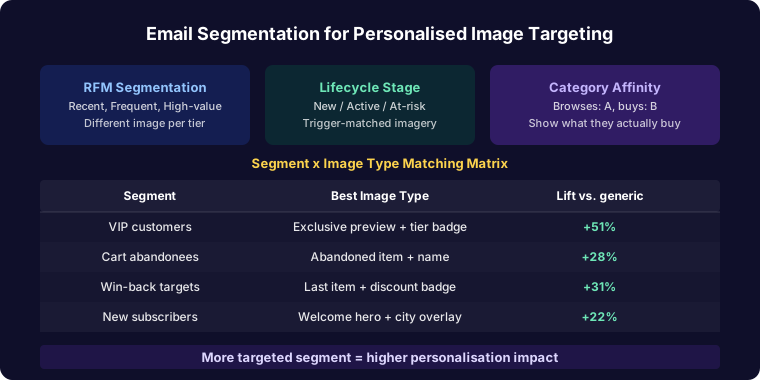
Each major segment needs its own Driphue template — or at minimum, its own visual treatment within a shared template structure. Maintain brand consistency across all segment templates (the same typeface, colour system, and photography aesthetic) while varying the tone and messaging context. Your VIP template might feature a premium, restrained design with gold accent elements and exclusivity-forward copy. Your new subscriber template uses warm, inviting imagery with an emphasis on brand discovery. Your win-back template incorporates a specific incentive offer prominently in the design.
In your ESP, use conditional content blocks or segment-specific flow branches to route each subscriber to the template appropriate for their lifecycle stage. Each template includes the subscriber’s name as the personalisation layer — the segment determines the visual and messaging context that name appears within.
Combining Segments with Other Personalisation Dimensions
Segmentation compounds with other personalisation dimensions. Location-based personalisation layered on top of lifecycle segmentation produces images that are both contextually relevant to the subscriber’s relationship stage and geographically relevant to their location. A VIP customer in Miami sees a premium beach-lifestyle personalised image with an exclusive access offer; a new subscriber in Edinburgh sees a warm welcome image with local delivery information. Each layer of personalisation adds incremental engagement that neither layer would achieve alone.
For the full data strategy that enables multi-dimensional personalisation, see our first-party data guide.
Measuring Segment Performance
Track personalised image performance separately for each segment: engagement rates, revenue per email, and conversion rates for each segment’s personalised images versus their previous generic emails. This reveals which segments benefit most from which personalisation approaches, where incremental investment in new template variants will produce the highest return, and how the personalisation impact compounds over time as subscribers move through lifecycle stages.
The most useful comparison is not segment A versus segment B — it is each segment’s personalised performance versus its own pre-personalisation baseline. This controls for the inherent differences between segments (VIP customers will always outperform new subscribers regardless of personalisation) and isolates the personalisation lift cleanly. For comprehensive measurement methodology, see our ROI measurement guide.
Real Results from Segmented Personalisation
Multi-brand retailer — 52% overall email revenue lift: Implementing segment-specific personalised images across lifecycle stages — separate templates for new subscribers, first-time buyers, repeat customers, VIPs, and lapsed customers — increased total email-attributed revenue by 52%, with the strongest lift in the VIP and cart abandonment segments where visual differentiation had the most impact on subscriber perception of exclusivity and urgency.
Subscription box brand — 34% lower monthly churn: Lifecycle-segmented personalised images in retention campaigns — specifically VIP recognition imagery for the highest-tier subscribers and re-engagement imagery for those showing declining engagement — reduced monthly subscriber churn by 34% compared to the previous one-template-for-all approach.
Start Segmenting for Better Personalisation
Segmentation and personalisation are complementary strategies that compound each other’s impact. A personalised name on a generically targeted email is better than no personalisation. A personalised name on a contextually relevant, segment-appropriate image is transformative. The combination is the standard that drives the 40–60% revenue lifts brands consistently achieve when they deploy both together.
For the complete personalisation strategy, see our email personalisation guide. For the 90-day implementation roadmap, see our implementation roadmap. Start your free Driphue trial and deliver the right visual experience to every subscriber at every stage.
Keep reading
More from the blog
 Marketing Strategy
Birthday and Anniversary Email Campaigns: Personalized Images That Drive Repeat Purchases
9 min read Marketing Strategy
Black Friday Email Marketing with Personalized Images and Countdown Timers
10 min read Marketing Strategy
Dynamic Countdown Timers in Emails: How to Create Urgency That Actually Converts
6 min read
Personalise every image in your emails
Turn your Klaviyo, Brevo or any-ESP campaigns into dynamic, per-subscriber images and countdown timers — no code required.