Cart Abandonment Email Recovery with Personalised Images: A Complete Strategy Guide

Why Personalised Images Are Your Most Powerful Cart Recovery Tool

Cart abandonment is the single largest revenue leak in e-commerce. Industry data consistently shows that around 70% of shoppers who add items to a cart leave without buying. For a store doing £500,000 a year in revenue, that means over £1 million in annual abandoned cart revenue is theoretically recoverable — and the primary recovery mechanism is your email sequence.
Cart abandonment emails already perform better than any other triggered email type because the intent is there: the shopper browsed, added to cart, and left. The barrier is friction, distraction, or price hesitation — not lack of desire. Personalised images remove friction by making the recovery email feel like a personal message rather than an automated alert.
ASOS introduced personalised first-name images in their cart abandonment sequence and saw a 34% lift in recovery click-through rates. Allbirds uses personalised hero images in their cart recovery emails and consistently reports above-industry recovery rates from their abandonment flow. Bose added personalised name images to their cart abandonment sequence alongside product imagery and saw a 28% increase in recovery conversion rate compared to their previous generic template.
What Makes Cart Abandonment Personalisation Different
Most e-commerce brands personalise their cart abandonment emails with the subscriber's first name in the subject line and the product image in the email body. This is useful but no longer differentiating — it's become the default.
The brands seeing outsized recovery rates are taking personalisation further: first-name personalisation in the email image itself, creating a visual that says “[Name], you left something behind” in a designed, on-brand graphic. This image-level personalisation creates a qualitatively different experience from a subject line tag and a product grid.
The reason it works is psychological: seeing your name in a visual element activates attention in a way that reading it in text doesn't. The name-in-image effect is well-documented in personalisation research — and in cart abandonment emails, where the goal is to cut through the noise and pull the shopper back, visual personalisation is a meaningful advantage.
Cart Abandonment Email Sequence Structure with Personalised Images
Email 1: The Immediate Recovery (1–2 Hours After Abandonment)
The first cart abandonment email should arrive within two hours of the shopper leaving the cart. At this point, the shopping session is still fresh and the purchase intent is at its highest. A personalised hero image — “[Name], your cart is waiting” — alongside the abandoned product creates a recovery message that feels timely and personal.
Keep email 1 clean and focused: the personalised image, the product, and a clear call to action. No discount offer yet — the goal of email 1 is to recover the shopper without eroding margin.
Email 2: The Value Reminder (24 Hours After Abandonment)
Email 2 arrives the following day for shoppers who didn't recover from email 1. A personalised image that reinforces the value proposition — free delivery, easy returns, product quality — alongside the subscriber's name creates a second touchpoint that feels like a brand communication rather than an automated push.
For price-sensitive categories, email 2 is a good point to introduce a modest incentive. A personalised image with the subscriber's name alongside a limited-time offer creates a strong recovery prompt for shoppers who left due to price hesitation.
Email 3: The Final Reminder (48–72 Hours After Abandonment)
The third and final cart abandonment email should be brief and direct. A personalised image that signals this is the last reminder — “[Name], last chance” — creates a gentle urgency that converts the most hesitant shoppers. After email 3, move the non-converter to a standard re-engagement or browse-abandonment flow.
Personalisation Strategies for Cart Abandonment
First-Name Personalisation
The foundational cart abandonment personalisation: the shopper's first name in the recovery email image. Pair the name with a warm, direct message — “Emma, you left something behind” or “Emma, your order is almost complete” — and the recovery email immediately feels like a personal message from the brand.
Segment-Based Personalised Images
For brands with loyalty programmes or VIP tiers, segment your cart abandonment audience and serve tier-specific images to each group. A VIP-tier shopper sees an image that acknowledges their status alongside the recovery message. A first-time abandoner sees a different image focused on welcome and brand introduction.
For the full loyalty and VIP personalisation strategy, see our guides to loyalty programme email personalisation and VIP programme personalised images.
Purchase History-Informed Personalisation
For repeat customers who abandon a cart, personalise the recovery image based on their purchase history. A returning customer who has previously bought in a specific category sees an image that acknowledges their purchase history alongside the new cart. “Emma, add to your collection” feels different from a generic recovery prompt to a first-time shopper.
For the full purchase history strategy, see our guide to purchase history email personalisation.
How to Set Up Personalised Cart Abandonment Images with Driphue
Step 1: Design Your Recovery Images in Canva
Create three image variants in Canva — one for each email in your cart abandonment sequence. Email 1's image should convey immediacy and warmth. Email 2's image should reinforce value. Email 3's image should create a gentle final-call feeling.
Each design should include a prominent text layer for the subscriber's first name. The name should be central to the message, not decorative.
Step 2: Import into Driphue
Use Driphue's Canva integration to import each design. Mark the name text layer as dynamic, assign the parameter name name, and generate a personalised image URL for each of your three recovery email images.
Step 3: Connect Your ESP Merge Tag
Append your ESP's first name merge tag to each Driphue URL. For Klaviyo — the most common platform for Shopify cart abandonment flows: {{ first_name }}. For other ESPs, see our ESP personalisation guide.
Step 4: Update Your Cart Abandonment Flow
In your ESP's cart abandonment flow, edit each email and replace the hero image with your personalised Driphue URL. Test each email in the flow before activating to confirm the personalisation renders correctly for both named and unnamed subscribers.
Measuring Cart Abandonment Personalisation Impact
The key metrics are recovery click-through rate, recovery conversion rate, and recovered revenue per email sent. Compare these against your pre-personalisation baselines — or run an A/B test within your abandonment flow (personalised image vs. generic) to measure the lift directly.
For most brands, the largest lift comes from email 1 — the immediate recovery email — where the personalised image makes the strongest impression against the backdrop of a fresh purchase intent. Expect CTR lifts of 20–40% and conversion rate lifts of 10–25% from well-executed personalised cart recovery images.
For a systematic approach to calculating the full revenue impact, see our guide to measuring email personalisation ROI. For the full e-commerce personalisation strategy, see our complete guide to email image personalisation.
Recover More Revenue with Personalised Cart Abandonment Images
Cart abandonment recovery is the highest-ROI email flow in e-commerce — and personalised images are the highest-ROI upgrade to that flow. Design your recovery images in Canva, import to Driphue, connect your ESP, and deploy to your existing abandonment sequence.
For broader personalisation strategies across all email flows, see our guides to welcome sequence personalisation, purchase history personalisation, and re-engagement email personalisation.
Keep reading
More from the blog
 Email Personalization
The E-commerce Guide to Email Image Personalisation: From First Image to Full Automation
11 min read Email Personalization
Email Image Personalisation Tools Compared: Driphue vs NiftyImages vs Hyperise vs OKZest
10 min read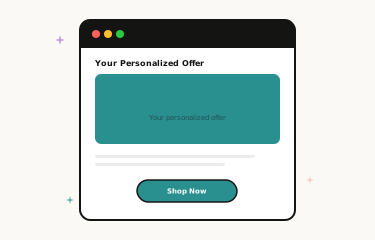 Email Personalization
Email Image Personalization: The Complete Guide for E-Commerce Brands in 2026
8 min read
Personalise every image in your emails
Turn your Klaviyo, Brevo or any-ESP campaigns into dynamic, per-subscriber images and countdown timers — no code required.