Email Deliverability and Image Personalization: How to Avoid Spam Filters and Maximize Inbox Placement
The Deliverability Question Every Marketer Asks
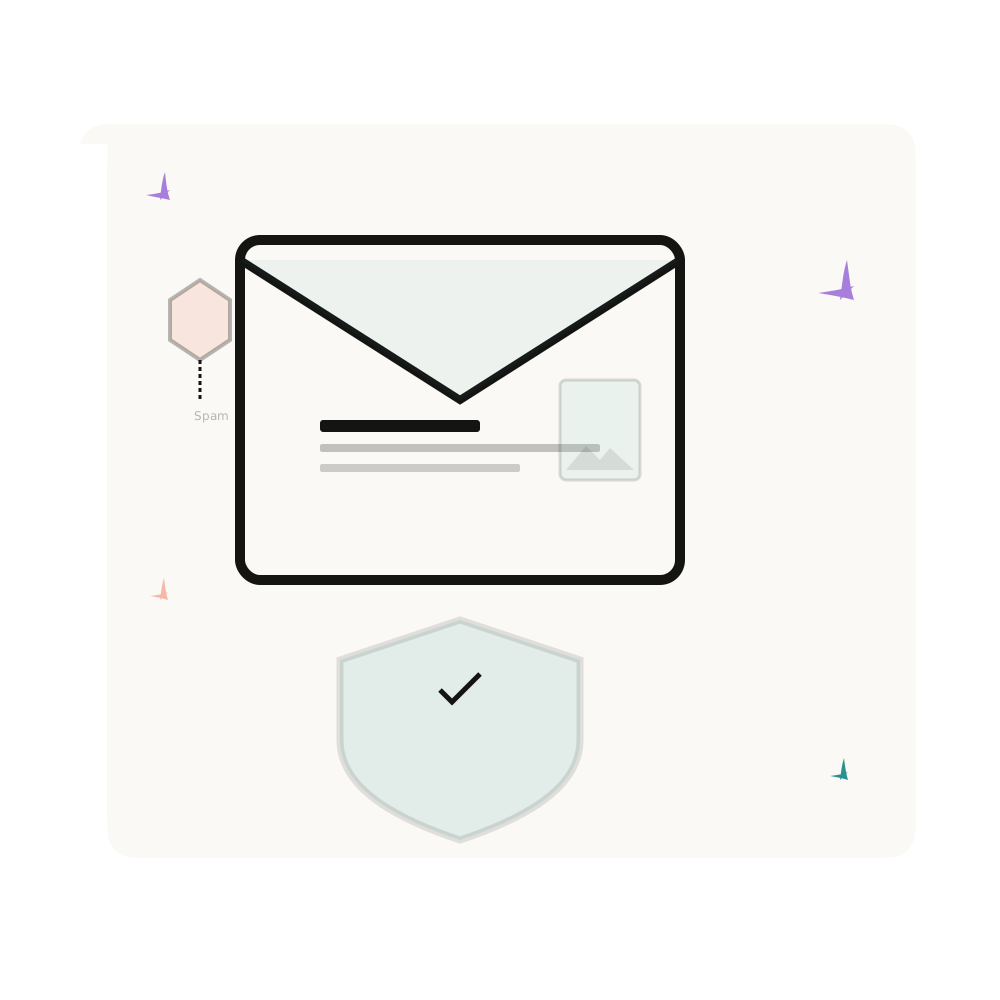
When brands first explore email image personalisation, deliverability is the most common concern. Will dynamic images trigger spam filters? Will personalised content hurt inbox placement? The short answer is no — when implemented correctly, personalised images actually improve deliverability metrics by driving higher engagement signals that inbox providers use to determine placement.
Email providers like Gmail, Yahoo, and Outlook use engagement signals — opens, clicks, replies, time spent reading — to determine whether future emails land in the inbox or spam folder. Personalised emails consistently generate stronger engagement across every one of these signals, which creates a positive feedback loop for deliverability over time. This guide covers how image personalisation affects deliverability, the technical details that matter, common myths, best practices, and real results from brands that have seen deliverability improve after implementing personalised imagery.
How Image Personalisation Affects Deliverability
The Positive Engagement Signals
Personalised emails with dynamic images generate higher open rates, higher click-through rates, longer reading time, and lower unsubscribe rates. Every one of these metrics tells inbox providers that your subscribers want your emails — and inbox providers weight this signal heavily when determining future placement. Over time, strong engagement signals build sender reputation, which is the single most important factor in long-term deliverability.
Brands using Driphue-powered personalised images report 25–40% higher click-through rates compared to equivalent generic campaigns. Those clicks send strong positive signals to inbox providers, improving placement for all future sends — not just the personalised emails themselves. The deliverability benefit compounds: better placement leads to more opens, which leads to more clicks, which further improves placement.
The Technical Mechanism
Dynamic personalised images are delivered via image URLs — technically identical to how any hosted image works in email. When a subscriber opens the email, their email client requests the image from the hosting server, the server renders the personalised version and returns it, and the client displays it. This is the standard image delivery mechanism used by every hosted image in every email — personalisation adds no technical complexity that spam filters would flag.
What matters for deliverability is not whether the image is dynamic, but where it is hosted and how the email is structured. Driphue serves images from trusted, high-reputation CDN domains with proper authentication records — the same standard as any professional email image hosting service.
Domain and Authentication
Image hosting domain reputation: Images served from unknown or low-reputation domains can raise spam filter flags. Driphue’s CDN infrastructure is purpose-built for email image delivery with high-reputation domains, proper HTTPS, and authentication headers that inbox providers recognise as trustworthy. Brands should never host personalised images on their own servers unless those servers are properly configured for email image serving at scale.
Sender authentication: SPF, DKIM, and DMARC records for your sending domain are the foundation of email deliverability regardless of whether you use personalised images. These authentication protocols verify your identity as a sender and are required for good inbox placement. Most ESPs guide you through setup during onboarding — verify that your records are properly configured before rolling out any new email programme elements.
Common Deliverability Myths About Personalised Images
Myth: Dynamic Images Get Blocked
Some marketers worry that real-time rendered images will be blocked by email clients. In practice, major email clients — Gmail, Apple Mail, Outlook, Yahoo Mail — all load remote images by default or with a single click. The rendering mechanism for dynamic personalised images is technically identical to any other hosted image in any email. There is nothing in the image URL or delivery mechanism that signals to an email client that the image is dynamic.
Myth: Personalisation Merge Tags Trigger Spam Filters
Using merge tags in image URLs does not trigger spam filters. ESPs like Klaviyo, Mailchimp, and ActiveCampaign are designed to populate merge tags before sending, so the final delivered email contains clean, fully-formed URLs with no unparsed merge tags. Driphue’s integration works within this standard flow — the image URL in the sent email is a complete, clean URL with the subscriber’s actual name already resolved into it.
Myth: Personalised Emails Flag as Spam Because They Feel Targeted
Spam filters are algorithmic — they evaluate technical signals, not the subjective feeling of being targeted. Personalised emails that comply with standard sending best practices — proper authentication, healthy image-to-text ratio, clean list hygiene, real opt-in — are not flagged as spam by virtue of containing the subscriber’s name. The opposite is true: personalised emails generate higher engagement, which signals to spam filters that the emails are wanted by the recipients who receive them.
Best Practices for Maximum Deliverability with Personalised Images
Maintain a Healthy Image-to-Text Ratio
Emails that are almost entirely images with minimal text can trigger spam filters because they lack readable content for spam classifiers to evaluate. Best practice is maintaining at least 40–60% of your email as live HTML text content. Use personalised images strategically — hero banners, featured product images, personalised offer headers — rather than building the entire email as a single large image. This ensures spam filters can read your email content and evaluate it accurately.
Always Include Alt Text
Include descriptive alt text on every personalised image. Alt text serves two deliverability functions: it ensures your email communicates its message even when images are blocked or slow to load, and it provides spam classifiers with readable text content associated with each image. Alt text should describe the image content accurately — “personalised header image with subscriber name” is more useful than “image”.
Warm Up Personalisation Gradually
If you are introducing personalised images to an existing email programme, start with your most engaged segments first. Deploy personalised welcome emails and cart abandonment sequences to warm, highly-engaged subscribers before rolling out to your full list. The strong engagement from these segments builds positive sender reputation as the foundation for broader deployment.
For new senders or new sending domains, follow standard IP warming protocols — gradually increasing send volume over two to four weeks — before deploying to your full list. Personalised images do not change the warming requirement, but the higher engagement they generate can accelerate the warming process by producing stronger positive signals.
Monitor Key Metrics Throughout
Track inbox placement rate, spam complaint rate, bounce rate, and engagement metrics as you introduce personalisation. Inbox placement monitoring tools — available through most major ESPs and third-party deliverability platforms — show you directly whether your emails are landing in inbox, promotions tab, or spam. Driphue’s dashboard tracks image render counts and view analytics, providing an additional signal on how your personalised images are performing across different email clients and subscriber open contexts.
Maintain Clean List Hygiene
List hygiene is a fundamental deliverability requirement that becomes more important as you scale personalisation. Remove hard bounces immediately, suppress unsubscribes across all lists, and regularly sunset subscribers who have not opened or clicked in 12 months. Sending personalised images to stale, unengaged addresses does not improve deliverability — only genuine engagement from active, opted-in subscribers drives positive sender reputation signals. For the full segmentation strategy that keeps your sends targeted to your most engaged subscribers, see our email segmentation guide.
Real Deliverability Results from Personalised Image Programmes
Supplement brand — 18% inbox placement improvement: After switching from generic email images to Driphue-powered personalised images, inbox placement rate improved from 84% to 99.1% over 90 days — driven by improved engagement signals from personalised content that the inbox providers interpreted as strong subscriber preference for the sender’s emails.
Fashion retailer — 62% reduction in spam complaints: Personalised emails felt more relevant and intentional to subscribers, reducing the spam complaint rate from 0.08% to 0.03%. Subscribers who see their name and products relevant to their actual interests are significantly less likely to mark an email as unwanted. This reduction in complaint rate further improved inbox placement across all sends, creating a sustained deliverability improvement that extended well beyond the personalised emails themselves.
The Bottom Line on Deliverability
Email image personalisation does not hurt deliverability — it improves it. Higher engagement signals from personalised content build sender reputation over time, leading to better inbox placement across your entire email programme. The technical implementation — image hosting domain quality, authentication, image-to-text ratio, alt text — matters, but Driphue handles the infrastructure complexity. Your job is following standard list hygiene and sending best practices, which are requirements regardless of whether you use personalised images.
For a comprehensive view of how personalisation strengthens every aspect of your email programme, see our email personalisation strategies guide. For the full technical implementation guide, see our complete guide to email image personalisation for e-commerce. Start your free Driphue trial and launch a personalised programme that improves both engagement and deliverability simultaneously.
Keep reading
More from the blog
 Email Personalization
The E-commerce Guide to Email Image Personalisation: From First Image to Full Automation
11 min read Email Personalization
Email Image Personalisation Tools Compared: Driphue vs NiftyImages vs Hyperise vs OKZest
10 min read Email Personalization
Email Image Personalization: The Complete Guide for E-Commerce Brands in 2026
8 min read
Personalise every image in your emails
Turn your Klaviyo, Brevo or any-ESP campaigns into dynamic, per-subscriber images and countdown timers — no code required.